
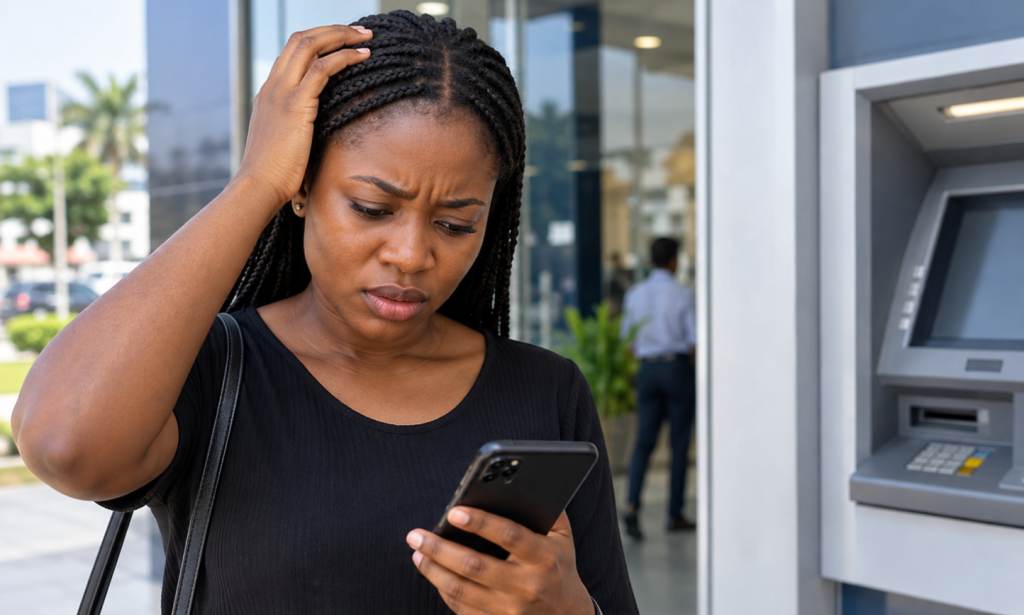
Losing your ATM card can be stressful, especially if the card is linked to your salary account, savings or other money.
The most important thing is not to wait and see whether the card turns up.
If your ATM card is lost or stolen, contact your bank immediately and request that the card be blocked or hotlisted. This reduces the risk of someone using the card for unauthorised transactions.
The same urgency applies if your phone is stolen and it is connected to your mobile banking or payment applications.
This guide explains how to block a lost or stolen ATM card in Nigeria, what to do if your card is retained by an ATM, what happens if you notice an unauthorised transaction, how to protect your bank account and what to do when you need a replacement card.
What Should You Do If Your ATM Card Is Lost?
If you cannot find your ATM card, assume that it is lost until you recover it.
Do not wait several hours or days hoping it will appear.
Your first priority should be to contact your bank and block the card.
Depending on your bank, you may be able to do this through:
- Your mobile banking app
- USSD banking
- The bank's official telephone line
- Internet banking
- A branch
- Another official card-blocking channel provided by your bank
The exact process differs between banks.
The Central Bank of Nigeria has previously advised customers to notify their issuing bank when a payment card is lost or stolen, and CBN payment guidance addresses the importance of promptly reporting lost or stolen cards.
What If Your ATM Card Was Stolen?
Treat a stolen card as an urgent security issue.
Contact your bank and request that the card be blocked immediately.
You should also tell the bank that the card was stolen, rather than simply saying that you cannot find it.
The bank may ask you questions to verify your identity and may advise you on additional security measures.
If your wallet was stolen together with your card, consider what other information the thief may have obtained.
For example, if your ID card, phone or other banking information was also stolen, take additional precautions.
How to Block a Lost ATM Card
The exact process depends on your bank, but the general procedure is straightforward.
Step 1: Contact Your Bank
Use an official channel.
Do not search social media for a random telephone number claiming to belong to your bank.
Use:
- Your bank's official website
- The official banking app
- Your bank's published customer-service number
- A verified branch
Step 2: Tell the Bank Your Card Is Lost or Stolen
Clearly state:
"My ATM card has been lost/stolen and I want to block the card immediately."
The bank may verify your identity before processing the request.
Step 3: Confirm That the Card Has Been Blocked
Do not end the conversation without confirming the action taken.
Ask:
- Has the card been blocked?
- Is it permanently blocked or temporarily frozen?
- Can it still be used online?
- Do I need a replacement?
- Is there anything else I need to do?
Step 4: Check Your Account
Review your recent transactions.
Look for:
- ATM withdrawals
- POS payments
- Online card payments
- Transfers
- Other transactions you do not recognise
If you see anything suspicious, report it immediately.
Step 5: Request a Replacement
Once your account is secure, ask the bank about replacing the card.
The bank may issue a new card with different card details.
Can You Block Your ATM Card Without Going to the Bank?
Often, yes.
Many Nigerian banks provide remote channels through which customers can block or deactivate cards.
These may include:
- Mobile banking applications
- USSD
- Telephone banking
- Internet banking
- Customer-service channels
However, the exact procedure depends on the bank.
Do not assume that a USSD code or procedure used by one bank will work for another.
If you are unsure, use your bank's official customer-service channel.
What If You Lost Your Phone and ATM Card Together?
This situation requires additional urgency.
If your phone contains your banking applications, losing the phone may create a second security risk.
You should consider taking these steps immediately:
- Contact your bank.
- Block the ATM/debit card.
- Report the stolen phone to your mobile network operator.
- Secure your SIM.
- Ask your bank what steps are required to secure mobile banking access.
- Change relevant passwords where appropriate.
- Monitor your bank account for unauthorised transactions.
Do not assume that a screen lock alone is enough protection.
A stolen phone can contain access to email, banking apps, SMS messages and authentication mechanisms.
What If Your SIM Card Was Also Stolen?
Contact your telecommunications provider immediately.
Request that the SIM be blocked and follow the provider's process for recovering your number.
This is particularly important if your bank sends transaction alerts or authentication messages to that number.
You should also notify your bank.
The combination of:
Lost phone + stolen SIM + lost ATM card
should be treated as a significant account-security event.
What If You Remember Where You Left the Card?
If you think you simply misplaced the card, you may be tempted to wait before blocking it.
That can be risky.
If the card has left your possession, you do not know who may have found it.
It is safer to secure the card first.
If you later recover it, ask your bank whether it can be safely reactivated or whether you need a replacement.
Do not assume that a card you reported as stolen remains safe to use simply because you found it.
What If You Notice an Unauthorised Transaction?
Act immediately.
For example, you check your account and discover:
₦150,000 ATM withdrawal
that you did not make.
Or:
₦85,000 POS transaction
that you do not recognise.
Contact your bank immediately and report the transaction.
Give the bank:
- Transaction amount
- Date
- Time
- Transaction type
- Transaction reference where available
- Any relevant screenshots
- Details about when you lost the card
Do not wait until the next week to report an unfamiliar transaction.
Lost Card vs Unauthorised Transaction
These are related but different problems.
Lost Card
You no longer have possession of your physical card.
Your priority is to block it.
Unauthorised Transaction
A transaction has occurred that you did not authorise.
Your priority is to report the transaction and secure your account.
Both
If your card is missing and there are unauthorised transactions, tell your bank about both problems.
This gives the bank a clearer picture of what happened.
What If Someone Knows Your PIN?
If you believe another person knows your ATM PIN, treat the situation seriously even if you still have your card.
Contact your bank and ask what security action is appropriate.
Do not share your PIN with:
- Friends
- Family members
- Drivers
- Domestic staff
- Bank agents
- Online support accounts
- Anyone claiming to be a bank employee
A legitimate bank employee should not need your ATM PIN to "help" you block a card.
Never Give Out Your OTP
The same rule applies to OTPs and authentication codes.
If someone calls and says:
"We are calling from your bank. Give us the OTP that was just sent to your phone so we can block the card."
Do not provide it.
End the call and contact your bank through its official channel.
A person who already knows that your card is missing may use that information to make the situation appear legitimate.
What If an ATM Swallows Your Card?
A card being retained by an ATM is different from losing it on the street, but you should still act quickly.
Do not assume that you can simply return the next day and collect it.
Contact your bank and report that the ATM retained the card.
The CBN's electronic-payment guidelines contain specific provisions concerning cards retained by ATMs, including procedures around rendering retained cards unusable and returning them to the issuing institution.
Your bank should tell you the appropriate next step.
Should You Wait for the ATM to Return the Card?
No.
Once an ATM retains your card, contact your bank.
If the ATM belongs to another bank, you may also need to provide the ATM location and time of the incident.
Give the bank details such as:
- ATM location
- Date
- Approximate time
- Bank operating the ATM
- Your card-issuing bank
- Any transaction details
Do not attempt to force open the ATM or ask an unknown person near the machine to retrieve the card for you.
What If You Lost Your Card Abroad?
Contact your bank as soon as possible.
If you are travelling, the bank may have international customer-service options or a process for blocking the card remotely.
You may also need to arrange an alternative method of accessing your money.
Before travelling, it is useful to have:
- Your bank's international contact information
- A backup payment method
- Access to your banking app
- Another account or card where appropriate
- Emergency funds
Can Someone Withdraw Money Without Your PIN?
The answer depends on the type of transaction and the security mechanisms involved.
ATM withdrawals generally involve authentication, while card payments can occur through different channels.
Modern card systems also support transactions that do not require the physical card to be inserted into an ATM or POS terminal.
This is why losing a card should not be treated as harmless simply because someone does not know your PIN.
Report the loss immediately.
Can Someone Use a Lost Card Online?
Potentially, yes.
Online card payments can use card information rather than an ATM PIN.
Depending on the merchant, card scheme and authentication requirements, transactions may involve different security checks.
This is another reason to block a lost card rather than assuming that the PIN protects everything.
What Happens After You Block the Card?
The card is generally prevented from being used for transactions according to the bank's card-control process.
Your bank may then:
- Permanently block the card
- Cancel the card
- Issue a replacement
- Change the card number
- Ask you to visit a branch
- Require additional verification
The exact procedure varies by bank.
Ask the bank whether the replacement card will have different card details.
Will Your Money Be Lost Because You Lost Your ATM Card?
No.
Your ATM card is a payment instrument linked to your account.
Losing the physical card does not automatically mean that the money in the underlying bank account has disappeared.
The priority is securing access to the account and preventing unauthorised transactions.
If you notice an unauthorised debit, report it immediately and follow the bank's dispute process.
What Information Should You Give the Bank?
When reporting a lost or stolen card, have useful information ready.
| Information | Why It Helps |
|---|---|
| Account name | Helps identify the customer |
| Account number | Helps locate the account |
| Card type | Identifies the affected card |
| Date/time lost | Establishes when the incident occurred |
| Last known location | Useful for explaining the incident |
| Recent transactions | Helps identify suspicious activity |
| Phone number linked to account | Helps with verification |
| Transaction references | Helps investigate disputed transactions |
However, never provide your ATM PIN, password or OTP merely because someone claims they need it to process the report.
What If Your Bank Says the Card Is Already Blocked?
Ask for confirmation.
If you contacted the bank through a legitimate channel and they confirmed the card is blocked, keep the reference number or evidence of the request.
You should still monitor your account.
Blocking the card does not mean you should stop checking your account for suspicious activity.
How to Get a Replacement ATM Card
The process varies between banks, but you will generally need to request a new card after the old one has been blocked.
The bank may require:
- Identity verification
- Account information
- Card replacement request
- Applicable fee
- Branch collection or delivery details
Ask the bank how long the replacement will take.
If you need access to money urgently, ask what alternative withdrawal or payment methods are available while you wait.
What If Your Salary Account Is Affected?
If your lost card is connected to your salary account, blocking the card does not normally mean that your salary account itself has been closed.
The bank account and the physical card are separate components.
However, you should still secure the card and verify that your account remains accessible through safe channels.
If you need money before the replacement card arrives, ask your bank about available alternatives.
How to Protect Your Bank Account After Losing Your Card
Blocking the card is the first step, but you should also review your wider account security.
Consider:
- Reviewing recent transactions
- Changing passwords if necessary
- Securing your email account
- Securing your phone number
- Removing lost devices from banking applications where supported
- Checking your account alerts
- Confirming your contact details with the bank
- Monitoring the account for unusual activity
The CBN has also emphasised stronger fraud monitoring and authentication measures within the Nigerian electronic-payment environment.
Keep Your Bank's Emergency Contact Details
Do not wait until your card disappears before searching for your bank's telephone number.
Save the official customer-service number in your phone.
You can also keep it somewhere secure outside your phone in case your phone is stolen at the same time.
A simple emergency list can include:
- Bank customer-service number
- Mobile network provider
- Insurance contact
- Emergency contact
- Important account information
Do not store your PIN alongside your card or phone.
What You Should Never Do
Do Not Wait Several Days
Block the card as soon as you realise it is missing.
Do Not Share Your PIN
Your bank does not need your ATM PIN to prove that you are the account holder.
Do Not Share Your OTP
Never give an OTP to someone who calls or messages you unexpectedly.
Do Not Follow Random Social-Media Support Accounts
Fraudsters sometimes impersonate bank customer-service representatives.
Use official channels.
Do Not Ignore Small Unauthorised Transactions
A small transaction can still indicate that someone has obtained your card details.
Report suspicious activity.
Do Not Throw Away Your Evidence
Keep screenshots, SMS alerts and complaint references.
A Simple Emergency Checklist
If your ATM card disappears tonight, follow this order:
1. Contact your bank.
2. Block the card.
3. Confirm that the card is blocked.
4. Check recent transactions.
5. Report any unauthorised transaction.
6. If your phone is also missing, contact your mobile network provider.
7. Secure your mobile banking access.
8. Request a replacement card.
9. Keep your complaint/reference number.
10. Continue monitoring the account.
The faster you act, the smaller the window in which a lost card can potentially be misused.
Lost ATM Card vs Lost Phone
These situations require slightly different responses.
| Problem | Immediate Action |
|---|---|
| Lost ATM card | Contact bank and block card |
| Stolen ATM card | Contact bank and block/hotlist card |
| ATM retained card | Contact bank and report the incident |
| Lost phone | Contact network provider and bank |
| Lost phone + SIM | Block SIM and secure banking access |
| Unauthorised transaction | Report to bank immediately |
| Lost card + unauthorised transaction | Block card and report transaction |
| Lost card + phone + SIM | Treat as an urgent account-security incident |
What If You Cannot Reach Your Bank?
If you cannot immediately reach your bank through one channel, try another official channel.
For example:
- Banking app
- USSD
- Official phone line
- Internet banking
- Branch
Do not use an unofficial number simply because it appears in a social-media comment.
If your card is lost or stolen, speed matters, but security matters too.
When Should You Contact the CBN?
Your first point of contact should normally be your bank or financial institution.
If you have a complaint that your bank has not resolved through its complaint process, the CBN provides a formal consumer-complaint escalation route.
This is particularly relevant where you have:
- Reported an unauthorised transaction
- Disputed a card transaction
- Complained about an unresolved banking issue
- Received no satisfactory resolution from the bank
The CBN's complaint process requires customers to first lodge the complaint with the financial institution and allow it an opportunity to resolve the issue before escalation.
You can read the CBN's complaint guidance here:
What Records Should You Keep?
If your card is lost or stolen, keep a record of your actions.
For example:
10:15 AM: Discovered card missing.
10:20 AM: Contacted bank.
10:24 AM: Card blocked.
10:26 AM: Complaint/reference received.
10:30 AM: Checked transactions.
10:35 AM: Reported suspicious transaction.
This may seem excessive for a small incident, but it becomes useful if a dispute later develops.
How to Prevent ATM Card Loss
Prevention is easier than dealing with the consequences.
Keep Your Card Secure
Do not leave it loose in your vehicle, office or public places.
Do Not Give Your Card to Strangers
Be cautious when someone offers to "help" you at an ATM.
Cover Your PIN
Shield the keypad when entering your PIN.
Check the ATM Before Using It
If something looks unusual or suspicious, consider using another ATM.
Keep Your Contact Details Updated
Make sure your bank can reach you quickly when necessary.
Enable Transaction Alerts
Transaction alerts can help you identify suspicious activity sooner.
Monitor Your Account
Do not wait for your monthly statement to discover unusual activity.
Bottom Line
If your ATM card is lost or stolen in Nigeria, do not wait to see what happens.
Contact your bank immediately and request that the card be blocked or hotlisted. Then check your account for transactions you do not recognise.
If your phone or SIM was also stolen, secure those immediately as well.
Never give anyone your PIN, OTP, password or authentication code, even if they claim to be helping you recover your account.
If an ATM retains your card, report the incident to your bank rather than assuming the card will automatically be returned.
Once your account is secure, request a replacement card and continue monitoring your transactions.
A lost card is inconvenient.
A lost card that remains active while you delay reporting it can become a much bigger financial problem.
Related Articles
- How to Reverse a Wrong Bank Transfer in Nigeria
- How Bank Transfers Work in Nigeria: NIP, USSD, Mobile Banking and What Happens When a Transfer Fails
- How to Get a Bank Statement in Nigeria and What It Is Used For
- How to Avoid Unnecessary Bank Charges in Nigeria
- How to Choose the Right Bank Account in Nigeria
Sources and References
- Central Bank of Nigeria — Approved Guidelines for Card Issuance and Usage in Nigeria
- Central Bank of Nigeria — Guidelines on Operations of Electronic Payment Channels in Nigeria
- Central Bank of Nigeria — E-Payment Dispute Arbitration Framework
- Central Bank of Nigeria — Complaint Lodgement

You must be logged in to post a comment.